Tuesday, November 15, 2011

The Entropy of Morality

I've had plenty of thoughts about "moral relativism", mostly that it's pseudo-intellectual garbage. I haven't bothered post exactly why I think that, but suffice it to say that it talks about everything as if its reducible to first order logic. If we can't (I mean literally can't) fully formalize math, then why the bloody hell would we expect to be able to do it with ETHICS?

But I thought of another reason why I believe morality exists. Because true morality is hard. I'm not talking about sparing someone's feelings when they ask you if they've gained weight or refraining from committing a crime. These are the easy things; social and legal forces are very overreaching and keep us in line. No, I'm talking about the hard choices. Putting yourself in physical danger because it's the right thing to do, living ascetically to escape the corruption of material wealth, quitting your job because of an ethical situation that you have little part in (like say... selling advertisements for cigarettes or dangerous pharmaceuticals that you yourself would never use.) Acts of serious courage and sacrifice are things you don't see every day; I myself confess that I've never made any risk or sacrifice great enough to stop questioning my own virtue.

What does this have to do with anything? Isn't that arbitrary? Well, no. Saying that something is hard is a way of saying that it means something. Cowardice is a dime a dozen. If I make a choice between an act of courage and an act of cowardice, it's not like both are decisions with equal weight. One is easy and common, the other rare and difficult; so it must mean more—just like it's more meaningful for me to write these words on paper than to just punch random unintelligible keys; or to solve a difficult math problem instead of make an unsubstantiated conjecture about something based on nothing.

In other words, truly moral actions will have greater information content. They prove something, even if that something may be "arbitrary", just like math; a subject in which we still value proofs (for good reason.) Just as a game means nothing if there are no rules (with the exception of Calvinball), an action means nothing without difficulty. Cowardice, greed and hatred, on the other hand, never prove anything. There's no test, no rules and no meaning.

Tuesday, November 8, 2011

Paradigms vs. Narratives

I think I have a simple definition of a narrative:

A paradigm is a sign system that is closed.

A narrative is a sign system that is open.

This also easily explains the difference between game design and interactive storytelling (to an extent; you can think of it as a spectrum, chess is on the "game" extreme whereas something like SimCity or Final Fantasy is a lot closer to the middle. Nothing yet on the "interactive storytelling" extreme.)


I'll elaborate more on this soon and also talk about how this is shaping my work.

For that matter I decided I'm going to also be a lot more open about my work. Scrooges go nowhere.

Friday, September 30, 2011

Command and Control

Why do we overeat and refuse to burn it off? Why do we procrastinate; or even burn out despite our passion for a subject? What about the state of the world? Why are politicians so disappointing; what should we trust in when we vote for them—rigid rationalism, protocol; or the feeling deep within our gut? What about the problems that we just think are never going to end—is it willpower, self-experimentation or something else?

I've benefited a lot in recent months by letting go of reliance on two sides of the same coin—declarative knowledge and conscious "willpower." Both are important and play a role in many things, but they are the exception rather than the rule. The way I came to this was through, yes, some changes to how I ate and exercised. I've never had a weight problem, but I have some other reasons, such as asthma, to look after what goes in my body.

Upon investigating these ideas, I saw that there was a general flaw in the arguments about obesity. Moralizing self-help gurus have convinced us everyday laymen have taken the truism that people gain weight because they "consume more energy than they expend" and somehow used some discursive sleight of hand to translate this to the idea that obese people are being weak-willed by overeating and not exercising. To quote one great thinker: what horseshit!

Have we learned nothing from the mistakes of Descartes or the piles of research on the body's effect on the brain? I could even wager that thousands of years of wisdom would back this; but I really don't know and could be wrong about that. We are deeply connected to our bodies; they are the source of emotions, which are by extension the source of our decision making. Don't believe me? How about the fact that even with tons of analytic knowledge ("facts"), severing the connection between our brains and our bodily dispositions disables our ability to effectively make decisions. But I digress.

The reason why this "calories-in/calories-out" argument doesn't work is that our behavior is affected by all the biochemical reactions that are going on in our metabolism. When we eat too much junk food too regularly, our metabolism breaks down and our ability to efficiently process nutrients falls apart; insulin surges through the body at unhealthy rates, we store perfectly good nutrients as body fat and our brain does not get the glucose it needs to stop yelling "I'm hungry!" The result is that we find ourselves crashing and needing more food. So perhaps we just need to burn it off? Unlikely; where would you get all the energy needed if you can't even feel satiated?

Of course, all this could be wrong too; remember that bit about syllogistic knowledge. But I am convinced that these systems work something like this—the world is just too connected and nonlinear. And for this reason I've started to wonder, in light of just how embodied our decisions are; whether we need a whole new way of thinking about how to do things. When we procrastinate, it's likely that our mind is telling us that it doesn't approve of the plan. But couldn't that be irrational? Well, yes; we're not always cut out for the modern world that we've set up for ourselves—but the wisdom of emotions seems to be seriously underestimated. Our emotions really may be what's right when we're procrastinating; an unrealistic plan really can slow us down after all.

And how surprising is this when you look at something bigger like the markets? Sometimes we like to give credit to politicans for saving or ruining the economy; but how much say do they really have? What effect does the average tax policy or stimulus plan have? I'd argue that sometimes they work; sometimes they provide a big enough jolt to shift things into another equilibrium—but that's a big maybe; the fact is, we can't even seem to predict where the markets go.

What does that tell us? That yes, there are things we can do. We have some conscious control over our choices and we certainly have times where we just need to stop making excuses and apply elbow grease. But the parallels become even more striking when we hear about the limits to our willpower; how they can be increased through certain behaviors and states of health—but those behaviors and states must be brought about in some way to begin with. We have a very fragile modicum of control over a system that is highly belligerent and, on top of that (though somewhat related), quite random. We need to understand and appreciate these systems for what they are; not only economics and nutrition, but also our habits, the social interactions of people; and of course the very stochasticity of life.

To do that, we must let go of the command and control model but not think that this is some key to "hijacking" our behavior. We talk about tricks to fool ourselves, but it's hard to believe that we can really just "trick" ourselves into doing everything. Nothing is going gently nudge me to do 8 hours of nonstop work (if only...) No, not a chance. There's something more than that. We need to look at the equilibria of our life; on the harm of deterministic thinking and the benefits of random events; on the anti-fragility behind growth and discovery.

It's hard to say for sure what it all means, but a lot of things have helped me towards this path. Eating and exercising more stochastically, cutting out certain food groups but not worrying if I cheat once in a while; not pushing the serotonin buttons of e-mail and Facebook first thing in the morning (getting bad at that), finding peace and discovery in fiction, walking, meditation and unscheduled activities; not adhering to rules too tightly.

But I'd hardly say that I read fiction for "knowledge" or take walks for "exercise"—more accurately I exercise to learn and read for the sake of my body. Exercise has a specific scent of discovery to it, it resides at the core of so many things in our hunter-gatherer past; reading makes me feel more whole, my body relaxes into a new state—just as well that I run anaerobically and weight-lift aerobically.

Maybe you agree, maybe you disagree. If you agree, how have you applied this to your life? If you disagree, you can have a say too ;)

Monday, September 26, 2011

Truth

Truth (capital "T" intended) exists.

But there are no such things as platonic forms. Only forms that we imagine.

We create forms and change them when we find that they cannot adequately describe the essence that we're attempting to capture.

It's in that moment of change, that flux between isomorphisms, that we see Truth. It's an aether that can only be seen via flux.

And that may be all that reality is; flux.

Tuesday, September 13, 2011

Meta-Entrepreneurship

I'm honestly hoping to get this blog back to being a regular thing. The past few weeks were pretty hectic, but now that we're finally getting through a long slog, I think I'll be able to start posting more.

Fear of Software should have a new demo up soon, btw, so keep a lookout for that.


There are a lot of things that I'd like to back-post about, but one concept recently came to mind that is not the most original but may well be overlooked. I called it "Meta-Entrepreneurship", and it came from the thought that the source of all entrepreneurship is problems. Now everybody knows this; every single book asks "what is the customer pain?"

And yet, everyone says that they don't have an idea. On second inspection, this claim is absurd. You're pretty much saying "I don't know of any problems." But this is silly; we cite problems every day as an excuse for not getting something done. In fact, this goes doubly for entrepreneurs. We do so many things that we seem to end up dealing with astronomical amounts of inconvenience on a daily basis. Even a fraction of our problems should be more than enough to give us new problems to solve and make some money from (or maybe change the world, if you're into that sort of thing.)

Now, of course, we all have our domains. I can't just go creating a new branch of my company that deals with the fact that I don't have a dishwasher in this house (or maybe I can); but there are plenty of inconveniences that must have some relation to our domain that if we set our minds to it, we can not only make our own processes faster but create new routes for success and profitability. That is, there's so much we can do if only we'd get a little bit more Meta about it.

I think there's also one other thing to take from this, however; and that's that if you're an entrepreneur, you shouldn't be blaming anything on inconveniences. Yes, some of them really are just that; but the whole spirit of entrepreneurship is capitalizing on the fact that there's a problem to be solved. If problems are such a, well, problem, then how can you convince yourself, let alone other people, that you're ready to solve a major one. As entrepreneurs, we have to go beyond the cliches and actually learn to love problems in every shape and size; not just the ones that we've cited to support some vision that we want to manifest:

That which rules within, when it is according to nature, is so affected with respect to the events which happen, that it always easily adapts itself to that which is and is presented to it. For it requires no definite material, but it moves towards its purpose, under certain conditions however; and it makes a material for itself out of that which opposes it, as fire lays hold of what falls into it, by which a small light would have been extinguished: but when the fire is strong, it soon appropriates to itself the matter which is heaped on it, and consumes it, and rises higher by means of this very material.

If we can do that, then every problem that we encounter, whether our own or someone else's, will be another fresh start.

Wednesday, August 17, 2011

Erudition and Innovation


My confession is that I'm writing this post in preparation for a lecture I'll be giving in a few days to the AIESEC conference. I figured what better way to help jog my mind than present the general gist of what I'm thinking to my viewers.

So without further adieu, what will I be talking about on this post? Something that I think hasn't been paid close enough attention: the usefulness necessity of broad erudition and its role in innovation. So let's begin.


My story is one that some readers of this blog probably know, but if there are any new readers out there, perhaps not. It was half a year ago that I found myself signing on as the co-founder of Fear of Software, and only a couple of months ago that I quit my day job as my initiation into becoming a fully funded entrepreneur. In that time, a lot has happened as I gained erratic but valuable experience and learned from the wisdom of my co-founder Nick LaRacuente, who was wise enough to get me out of the misguided logic of thinking "I'll just build it and they will come" or expecting to have a 2 year development cycle without any kind of intermediate prototyping. And yet I can't say much about this sort of a thing because with this startup, the story is really only in its opening chapter; the most shocking, difficult and serendipitous episodes have yet to arrive.

On the other hand, there's a whole lot that led to my standing right here (or in this case; sitting in front of this computer.) My story begins, well, probably from when I was 5 or 6, but zooming forward a bit... one could safely begin in high school. In middle school, I taught myself how to program and started making video games. Most of the products were over-ambitious, but they were always fun and once in a while I completed something exceedingly simple. I remember specifically, however, in my first year of high school coming across an editorial in Game Developer magazine, which I had a free subscription to, about the potential for games to be a legitimate art form on the level of cinema, books or even fine art. The idea hit me very hard; I was your average 14 year old, mostly interested in video games, coca-cola and generally trying as best I could to look cool; but this idea for some reason was just like a shot to the head; I couldn't shake it!

Unfortunately, I didn't always have my stuff together in high school, so my projects generally got a running start and fizzled out just as fast, but something else was going on at the same time. I found myself for the first time extremely interested in literature; I started reading novels all of the time, even as it interfered with my schoolwork; for a while I even thought that I wanted to become a novelist and writing fiction of my own. Film and music also became more interesting to me; before then, I pretty much just watched whatever Hollywood blockbusters looked sufficiently entertaining and listened to whatever was loud enough to ensure hearing loss. At one point I even found myself fortunate enough to collaborate with several artists in my high school on a graphic novel; a project that actually went surprisingly well--it was certainly childish, with all sorts of elves and demons reminiscent of Lord of the Rings with a twist of Saturday-morning anime; but interspersed with poems and philosophical digressions (but don't get me wrong, it wasn't particularly good; this was high school!)

Life was actually pretty interesting in high school. Not much got done, at least not on the surface, but a lot was brewing. I still remember all of the afternoons I frittered away with friends hanging around nearby diners and walking the streets of Manhattan; but I digress, you don't want to hear that mushy stuff. But my point was something was going on in all that time; metamorphosis is never as straightforward as one things. Soon afterwards, I entered college; and luckily, a college where I'd have the same good fate of meeting friends that would help me develop further; there's another digression I need to take—good friends are important, they'll be the ones who enrich your experiences and lead you to your greatest ideas. This counts double for entrepreneurship, which is about people, your customers; not just the abstract ideas that one can go on for pages about in a novel or express in a piece of music.

Despite some initial confusion as to what I wanted to do with my time in college, I found myself as a double major in English and Computer Science; English because I had always had an interest in literature and found myself enchanted with the study of books when I tentatively took a class on John Milton and fell in love with Paradise Lost—so dense with potential criticism that I read the entire thing at a rate of about 3 pages per minute, which admittedly left me a stressed out mess as I never had enough time to get my work done and barely passed my all-important math class.

But along the way I also found a few books on my own that opened my ideas to the process by which ideas are generated. In freshman year, I came across a book by the esoteric but highly renowned game designer Chris Crawford*, which rekindled my dying interest in game design. Later, in junior year, I came across The Black Swan by Nassim Taleb—which if you read this blog (or know me in person), you know that I never shut up about it.

It's writers like these (a list of which would amount to some light name-dropping) that I hope to pay homage to in this post by using their ideas to explain the creative process and get across the simultaneously childishly erratic and gut-wrenchingly rigorous nature of innovation.

These writers, namely Crawford, left me with a new sense of purpose in my endeavors as well. I dreamed of a new kind of video game that would fit my changing self; the more serious self that found video games fun once in a while but couldn't feel engaged in them the same way as when he was a child. They were no longer as captivating, I had grown older and suspending my disbelief was not as easy as it used to be. I felt that this was what had turned most people off of gaming; and I wanted to bring the experience I had had with video games as a child to everyone. So with a new sense of purpose, I decided that I wanted to make video games that were serious intellectual challenges that engaged people's critical thinking, that would create decisions where people would have to inevitably look back and wonder about the consequences of what they did, that would make the player empathize with characters and be too engaged to move through its world as nothing more than a cold and calculating machine. I wanted to make an experience as universal as a movie or a book.

That put me on the path to today's startup, albeit in a very weird way. In junior year I applied for the honors program in computer science in order to work on a technology called Interactive Storytelling. This would be for creating games with stories that the player could change the course of through their decisions; and they would involve lifelike characters and difficult choices that would fit into complex narratives; there would be closure and catharsis, but also ambiguity. I was accepted, and soon enough I found myself overwhelmed. Luckily, a torrent of ideas came from a class in literary theory I had tentatively signed up for; which I'll talk more about soon.

To make things short, after two semesters of hard work, I cobbled together a tiny prototype and presented it to a general audience as well as the computer science department. The reviews were mixed, but I was happy nonetheless. After graduating college with Honors, I went on to work on it in my spare time before taking a hiatus and getting by with my day job as a paralegal. That is, until Nick convinced me to join forces with him to create a startup; and I couldn't say no.

Our two projects, when compared, shared a lot of theoretical qualities. But we decided to put our respective goals on hold when a new market opportunity came up. But I'm not here today to advertise our project, I wanted to talk about ideas!


So, what is "the stuff that dreams are made of?"
Well, not dreams; we all know that those come from living in your parents' basement wondering when you're going to have a car—no, I meant ideas. Where do we get those?

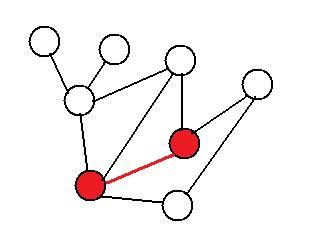
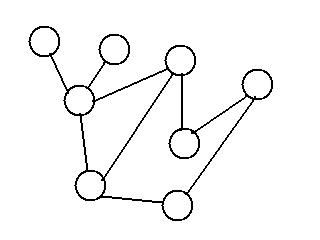
On the most fundamental level, ideas come from metaphors. That's right, every idea starts as a metaphor; a connection we see between two ideas because of their similarity. In your brain it looks a little bit like this two fold illustration I put up once before (you can praise me on my artistic talent in the comments section):
Photobucket
Your brain...

Photobucket
...getting an idea!

So, those two dots that lit up, what are they? Let's come up with a couple of ideas for concepts... okay, right, this isn't the lecture; just a blog post. Okay, so let's say that the one on top is the business cycle in economics; and let's say the other one is... partying! Because who doesn't love a good party, especially during an economic boom! Well, these two ideas are separated because, well, they don't really have anything in common.

Or do they? Let's think about this one. What do we do at parties? We sometimes have a few too many drinks. Did I say drinks? If any of you are religious or just generally more well behaved, let's just say extra-sugary fruit punch, the kind of stuff that will make you bounce off the walls before you get dizzy from all the running around and then crash. So, either way, you feel GREAT, and then you have a big stupid hangover; and we know that that's the price we pay for it, at least I hope we're all on the same page about that...

Now, what about an economic boom? Well, sometimes these booms are caused by a bubble. People get very enthusiastic about making a killing on the hot new asset, like say... big houses in the middle of suburbia. The price goes up 20%, then 50% then suddenly they're three times as expensive as they were two years ago. It can't just continue like this though; how many people are really going to pay a million dollars to move into a new house? Are you going to do that?

So what happens? The bubble bursts! And mind you, for those who are interested in the history of finance, this once happened in Holland over the price of tulips until... guess what? Somebody realized you can just grow them yourself. So suddenly, prices have to return to a level that actually makes sense; but with everyone having spent so much money on houses and others expecting to make a lot of money selling houses and all the people who were hired to build houses because they were so profitable, guess what happens to all of them? Not very pleasant to think; a lot of jobs, money and opportunities lost. The economy goes through a recession, readjusting to the sudden change that's happened.

But wait, there's a connection there. Something caused things to go up, to become super-active, and now that it's gone, everything comes crashing back down. And that's when we get the idea that maybe there's a connection; we realize that we need lows in order to correct the highs. So there you have it, now you know that binge drinking is a lot like a bad asset bubble.

These are the metaphors that help us advance in technology and discover new customer needs. Don't believe me? Sim City, one of the most successful video games of all time, was inspired by the reproduction of cells.** The beautiful paintings by M.C. Escher are derived from mathematical concepts of recursion, topology and infinity (among many others.) More recent AI methodologies such as neural networks are inspired by biological systems rather than straight-up computations. Even our own idea of what goes on the world is shaped by far-away stories; we look at politics through the lens of historical narratives and fictional fables. People in the United States are always asking "Are we Rome?" Sometimes overtly, but also implicitly whenever they ask about the future of that country.

This happens even on a deeply neurological level. Our brains are ultimately pattern seeking devices and look to find patterns that match other patterns. We see it even in our everyday lives; have you ever seen a shadow and thought a dangerous person was waiting in a corner to attack you; only to find out that it was a garbage can? What about being startled at the sudden rustle of leaves in the middle of silence? This is pattern recognition at its most basic, and it finds its way even into our highest levels of thought.

But before dismissing it all as illogical and irrational, you should remember just how smarter you, or anybody reading this post, is than a computer. That's right, we're so good at this game because we're not computers! Embrace it, be childish and let yourself find connections wherever they are. But how do we go about doing that? Well? Two things.

First, read. Read on every subject you can and don't worry about working on your specialty. You have your entire life to learn the newest Java API or the latest updates to the .NET framework (this part is for tech entrepreneurs; ignore it if you're just a reader that happened to get this far in my rant.) In fact, you'll find that the demands of most situations are so specific and strange that you won't be able to figure out what you need to know in advance; so don't sweat it (but do study your fundamentals, they come in handy.) Pick up some fiction and poetry; or if you're the more serious kind (like myself for a while), bury your nose in some history, economics, psychology or anthropology. Be sure to learn some math too; big concepts that can help you understand things as systems. But you should all in all be looking to understand things in three categories: systems, ideas and the human condition. The third of those comes in fiction and poetry; stuff that really gets at what makes people tick, but that also requires doing another thing...

Live! There is no erudition without experience. Or put another way:

  "Experience, though no authority Were in this world, would be enough for me" -The Wife of Bath


A lot led to where I am now; much of it serendipity and a slowly accumulated pile of books, but I'm most prepared for where I am now from the experiences I've had messing up, doing the wrong thing, doing all kinds of things that left me kicking myself in frustration. If it weren't for that, there would be nothing to hold all this together, just a bunch of gobbledygook.

Mistakes, there's an important word, and it reminds me of another question. What do we do with all these crazy ideas? Where is the empiricism? Ah, there's another idea I have to credit Chris Crawford with...


A T-Rex for ideas!

That's right, our ideas are just all vulnerable little sheep, and we need a T-Rex to rip all but the toughest of them apart. That means attacking your ideas from every angle. Forget all this about being nice to yourself, be a contrarian, drive yourself crazy; be like that kid who keeps asking endless questions about why he needs to take a bath! Not only that; go out and talk to people about your ideas. This is how Nick and I figured out what to do with our own product; we went out and talked to people. And as always, you don't always hear what you want to hear; but that's good, you're growing. Finally, go out there, and just make some mistakes. Not too big though, I don't want anyone coming back here with a missing limb!

As Kanye West once said; "that that don't kill me, can only make me stronger!" So go out there and get stronger, I'm rooting for all of you. And thank you for reading.

---------------------------------------------------------
*He has a wonderful website for those interested: http://www.erasmatazz.com

**See John Conway's The Game of Life

Saturday, August 13, 2011

Consciousness (In 3.5 Steps)

I spent way too much of 2010 pondering about metaphysics, so I gave it a break until recently when I cracked open Godel/Escher/Bach by Douglas Hofstadter and read the first chapter. That was enough to fill in the blanks to a fragmented theory of existence that I had been churning around for most of 2010. Here are the basics; I will elaborate further if anyone is interested:


1) Existence and Consciousness are inseparable

From an epistemological standpoint, I don't see any way these can be safely separated. Therefore, I'm assuming that they can't. There are other reasons, which are still a mess in my head, but I am more or less working from what I consider the indisputable truth of subjective experience.

2) Experience is the friction of incomplete information

Why do we never seem to remember locking our door? Why do we remember surprises more than routine things? Because we failed to predict, thus signifying new information. In information theory, it's called information content and is measured by how many bits it takes to store; if a probability distribution has a single outcome that is 100% likely to occur, that probability distribution has no information content.

Another way of thinking about this is that information content is also called entropy*, which in physics is the irreversible disorder that arises from motion, which is very related to that other phenomenon we call friction.

Wolfgang Iser brilliantly applies this theory to the experience we have when reading books and just about everything else in life seems to follow. When are video games boring? When there's no challenge left. When do movies suck? When they're way too predictable. But thankfully, things are always at least a little bit different than we anticipated them.

3) You need identifiers to signify difference but you need difference to distinguish the identifiers from one another; this paradox creates a regress loop.

To put that in English, let's consider the colors of objects. If everything were the color red, we'd have no such thing as color. We notice things because there are differences. This ties back in to what I said about information content in the previous post; if there's a 100% probability of one particular outcome, then there is no information.

So if we want difference, we need some trait in which these things are different. But where does this trait come from? It would need to be distinguished from something else. Therefore, we're faced yet again with the same problem ad infinitum.

One last thing is needed then, to close this odd regress loop. Once we've done that, we essentially have a system in which we can continue to seek information in a cycle of anticipation and surprise but never reach the end:


While writing this, I realized that I was missing the answer to this part. I will try a basic sketch of this:

-There is some kind of self-reference that closes the loop of this problem with infinite levels of "difference"

-The result manifests itself as a paradox (or many of them--perhaps they all mean the same thing) such as Godel's Incompleteness Theorem or the Time Dilation paradox.

-This creates a dog-chasing-its-tail effects in which a recursive pattern creates a fractal of uncountable codes--the friction of these being what we know to be reality.

But feel free to take a stab at the last part and let me know what you think...


I should note that by the time I finish Godel/Escher/Bach, it may be the case that Hofstadter beat me to the punch; in fact, he says that his thesis is that Meaningless Symbols Acquire Meaning Through Self-Reference, but so far it has proven to simply be the connective link that I have been missing between the three steps that I outlined above; I just hadn't put them together the right way, but they were all there a year ago.


------------------------------------------------------

*Forgive me if I've abused the poor term; I'm not a physicist.